Japan, part 1: Ikebukuro, Kabukicho, and winter fireworks in Odaiba
An unforgettable first evening in Tokyo.
It has been six months since my first visit to Japan. During that time, I never found the chance to write about an experience that was so new to me. I went again this May. Afterward, I felt an increasing need to bring together the scattered thoughts I had collected, both to keep a record and to share them.
Arrival
Textbooks describe Japan as a country where East and West meet, and where modern life and tradition coexist because of its particular history. Years of watching anime may have taught me a little more about Japan than some people know. Even so, most of my impressions came from photographs, video, and other media.
I was born in Nanjing and hardly traveled while growing up. Before university, the farthest I had gone was Shanghai. I spent all seven university years in Xi'an and did not travel very far during or after that period. I wanted to visit Japan partly because years of anime had made me curious, and partly because I like walking around cities. Japanese streets strongly appeal to my visual taste. It seemed an ideal destination. In autumn 2023, I had both time and money, and international travel had returned to normal. I spent a month preparing the paperwork and planned a trip of nine days and eight nights.
The winter of 2023 was warm. Compared with November, the traditional peak season for autumn leaves, December is relatively quiet. I chose it to spend less on flights and hotels and avoid crowds. But that winter was unusual: December temperatures stayed above 15°C. I enjoyed excellent weather, beautiful scenery, and fewer people at a lower cost.
On the afternoon my plane landed at Haneda, Tokyo's sky was clear and almost cloudless. Through the window, I could immediately see Nishi-Shinjuku and the Skytree. Gray and white buildings covered the land around Tokyo Bay and continued toward the distant mountains.
I took my suitcase alone from the airport to the hotel by train. It was around two or three in the afternoon, and sunlight covered the city. That light made everything feel slightly unreal. Somehow I had left my country, begun speaking another language, and arrived as a stranger in a place I had long wanted to see.
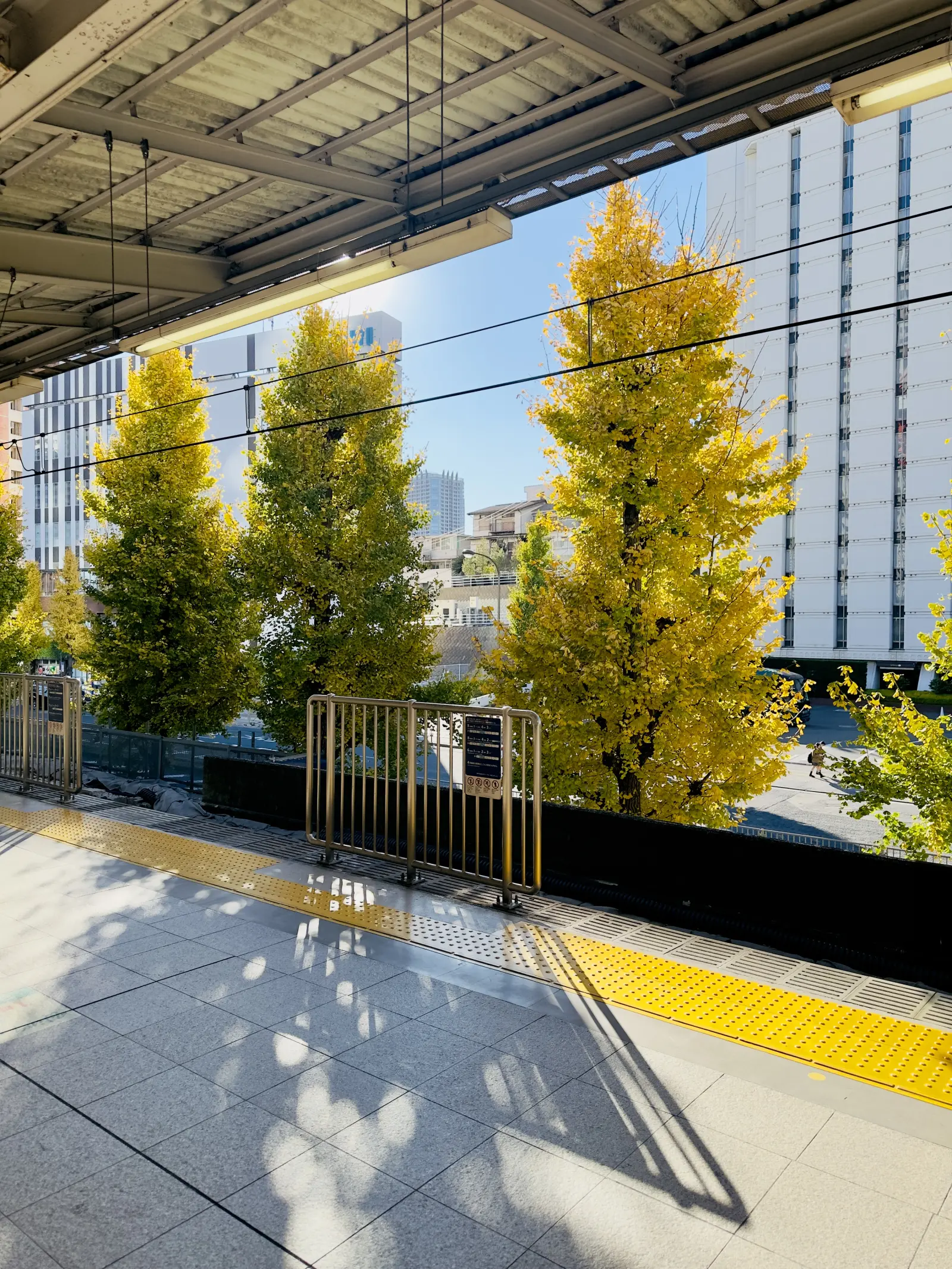
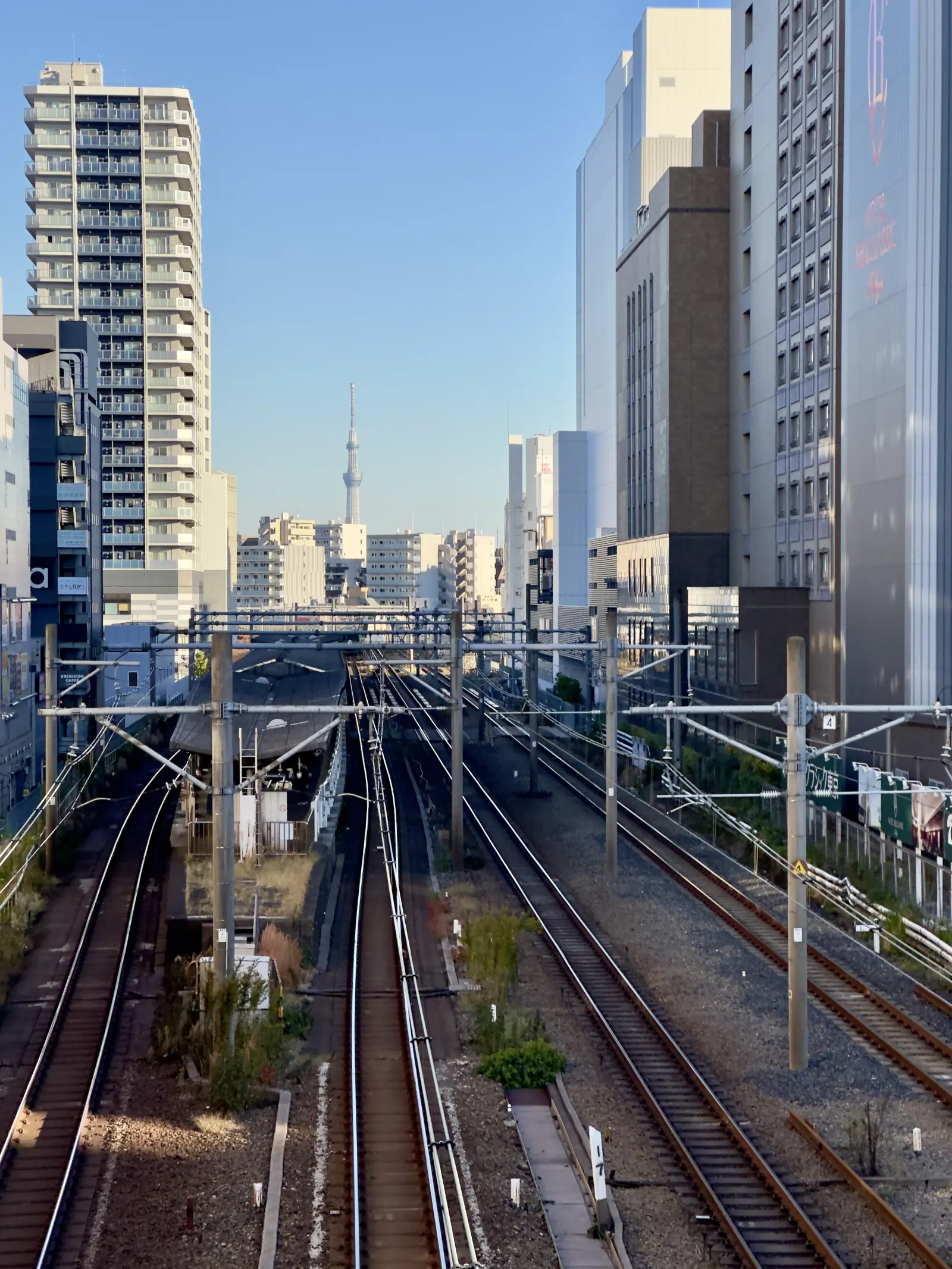
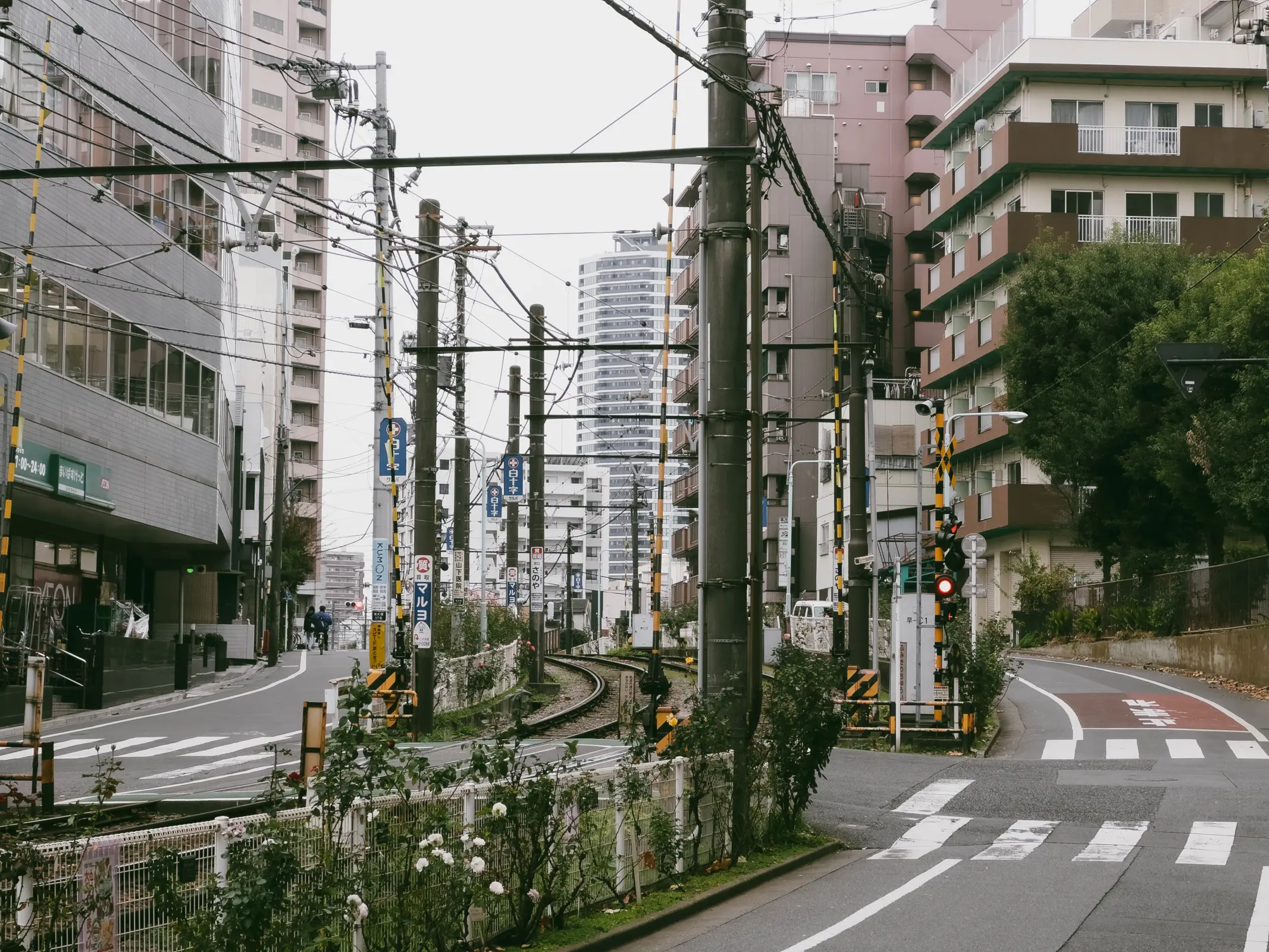
I stayed near Ikebukuro, where accommodation was less expensive. Although described as Higashi-Ikebukuro, the location was actually Otsuka, one stop from Ikebukuro on the Yamanote Line. This is the area where Midori's family bookshop is located in Norwegian Wood. It is said to have many older residents and to be quiet during the day. Outside Otsuka Station, the Arakawa tram line climbs beside the road, with utility poles and level crossings along its route. The scene had something of the atmosphere of a Hideaki Anno film.
After reaching the hotel, I quickly reorganized my backpack, took my camera, and went straight out to begin the trip.
First impressions of Tokyo
Tokyo is a long, narrow region, facing the sea to the southeast, with Saitama and Chiba to the north, Kanagawa to the south, and Yamanashi to the west. Chiba has its well-known monorail and Disneyland. Yokohama, the Fujisawa coast, and Enoshima are in Kanagawa. Yamanashi and Shizuoka share Mount Fuji. What people usually mean by Tokyo is its central twenty-three wards. These cover only a little over 600 square kilometers but are home to almost ten million people.
Japanese urban buildings have a distinctive appearance, especially in Tokyo. They vary in height and often occupy only a few hundred square meters, yet rise to seven or eight floors. Their surfaces are generally matte rather than large glass curtain walls. This gives the city a consistent range of colors in different weather. Together, these features make Tokyo's skyline noticeably different from those elsewhere.
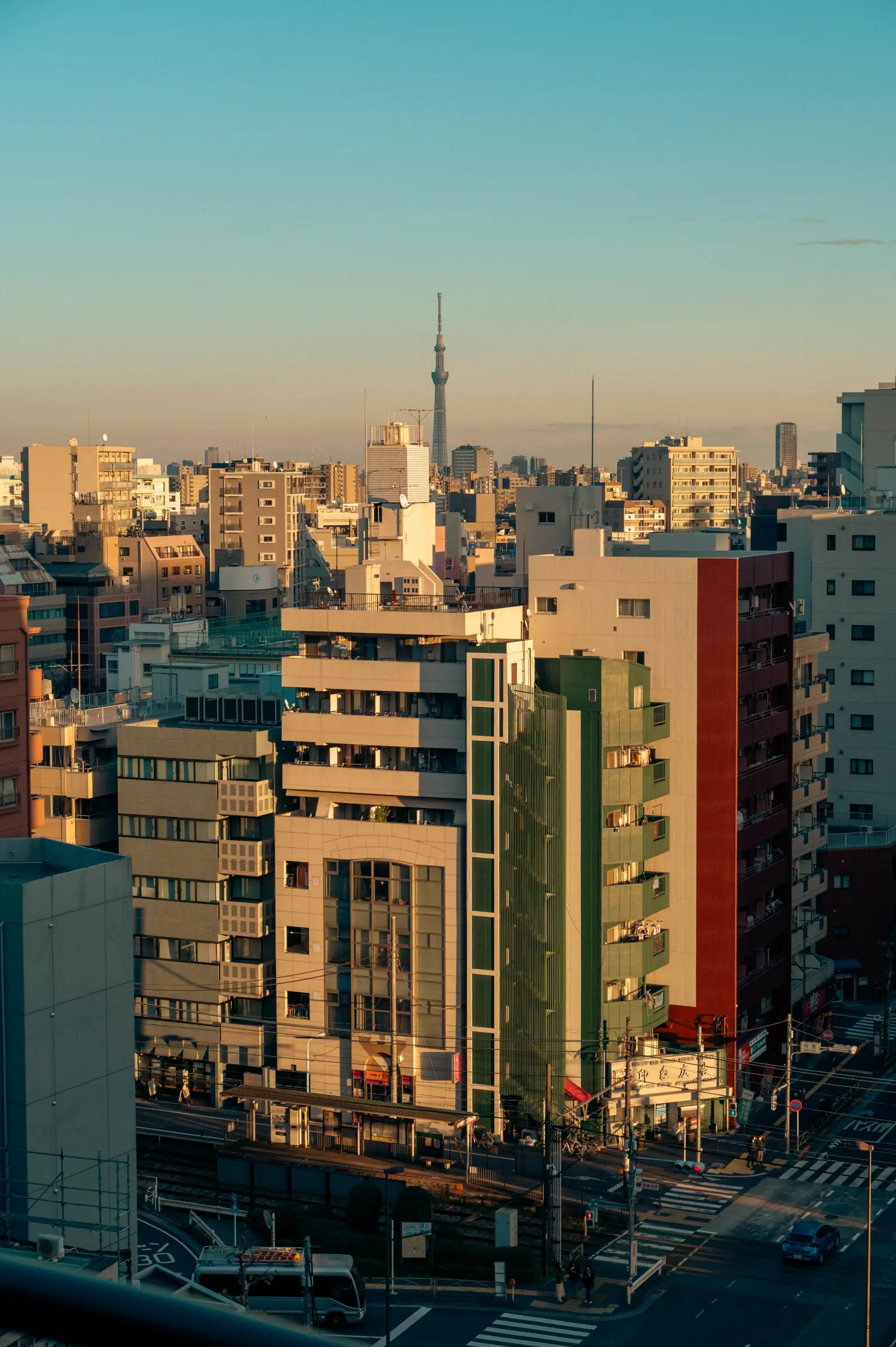
Most Tokyo streets are very clean, sometimes almost spotless. I was struck by the absence of cigarette smoke or musty smells in the streets and trains. Clearly, this is not true everywhere, but the city is generally tidy. A visitor staying only a few days might imagine that all of Japan is equally spotless. In some corners and less busy places, things are not quite so clean.
Ikebukuro Station
Ikebukuro is in Toshima Ward and has a large station, shopping areas, and theaters. A walk of about twenty minutes from my hotel, under the elevated Metropolitan Expressway, brought me to the east entrance of JR Ikebukuro Station.
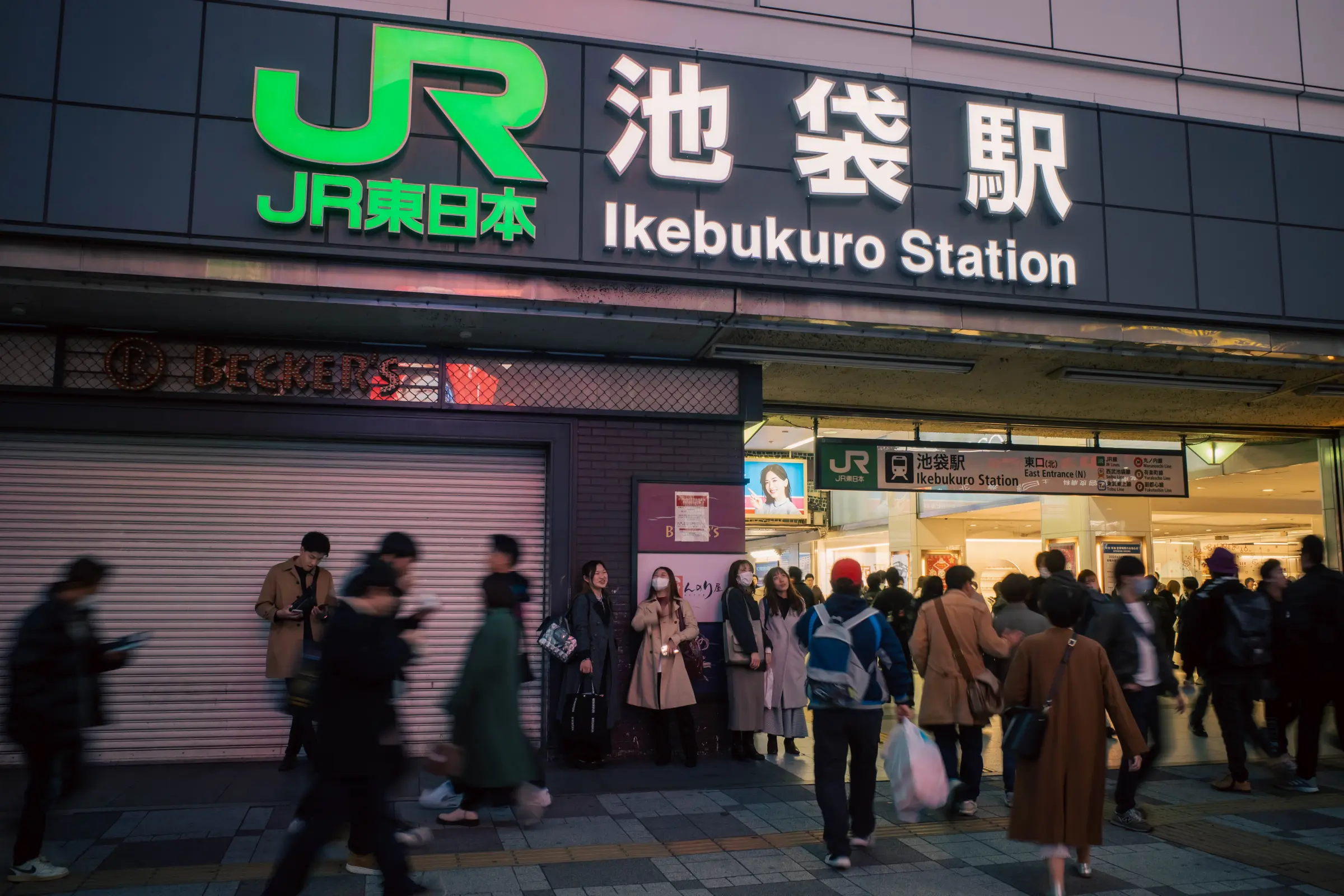
Many Japanese words come from Chinese, in both written form and pronunciation. Although much vocabulary is native, the language has absorbed Chinese characters and some of their readings. The word for a railway station comes from the old idea of a post station: a place where official messages and mail passed through, and where travelers rested or changed horses. Modern transport retained the term. Chinese uses the character 站, while Japanese uses 駅, read eki. Like many major stations, Ikebukuro combines numerous connections with a huge shopping complex. It gave me my first practical sense of the distinctive way Japanese railways operate. Many department stores beside stations, such as Seibu Ikebukuro, are run by railway companies as commercial activities that support railway operations. They contain shops and restaurants, often across about ten floors.
Ikebukuro, Shinjuku, and Shibuya are known as the three major subcenters on the Yamanote Line. I understand this to refer to their roles as transport and commercial centers. Ikebukuro is one of the capital's main transport hubs. Besides the Yamanote Line, it serves the Shonan-Shinjuku Line, Saikyo Line, Tobu Tojo Line, Seibu Ikebukuro Line, and several subway lines. This makes it the world's third-busiest railway station after Shinjuku and Shibuya, with an average of 2.64 million passenger movements a day.
Ikebukuro is also known for its Chinese community. Unlike the older communities in ports such as Yokohama and Kobe, which opened near the end of the Edo shogunate and attracted migrants before China's reform era, Ikebukuro's Chinese population is said to have grown mainly through students and other new arrivals since the 1990s. Nearby streets have many Chinese restaurant brands, including Yang Guo Fu Malatang.
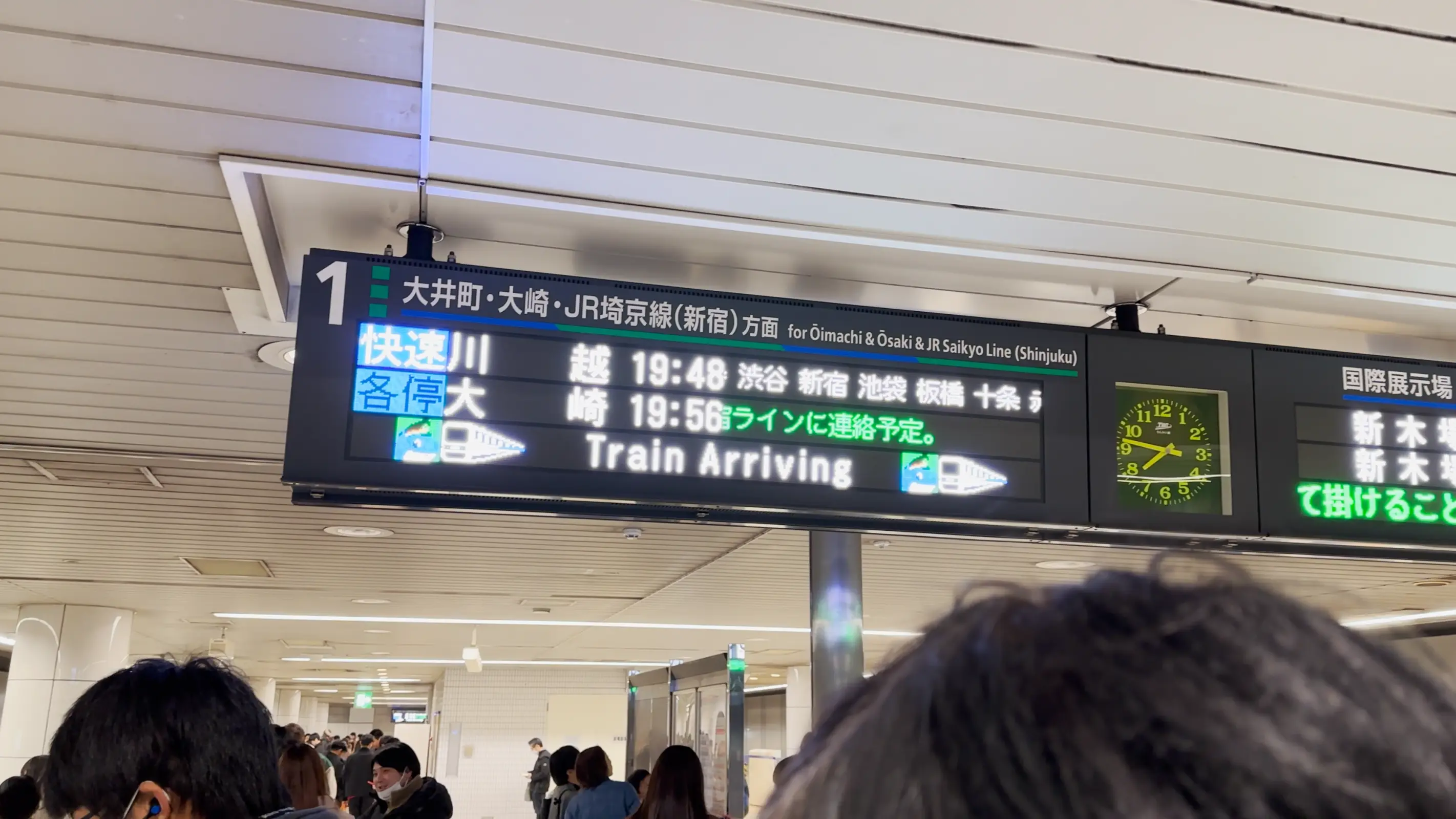
I met a friend, and after a short conversation we ate at a noodle shop. I ordered soy-sauce ramen with sliced pork. The broth was slightly bitter. Although not especially salty, its flavor was strong enough that I needed ice water with it. The noodles were oily, but after a day that had started at five in the morning, the large, rich meal restored my energy. We then went directly to JR Ikebukuro and took a train to Odaiba. The station was crowded on Saturday evening, but seemed orderly. Thanks to my friend's guidance, I avoided getting lost in the enormous station and boarded the right train.
Odaiba
Odaiba lies in Tokyo Bay. It began as offshore gun batteries built by the Edo shogunate to defend against foreign attack. After the war, artificial islands and urban development turned it into the area seen today. Its large shopping centers and entertainment facilities make it a popular destination. It is also home to the Unicorn Gundam.
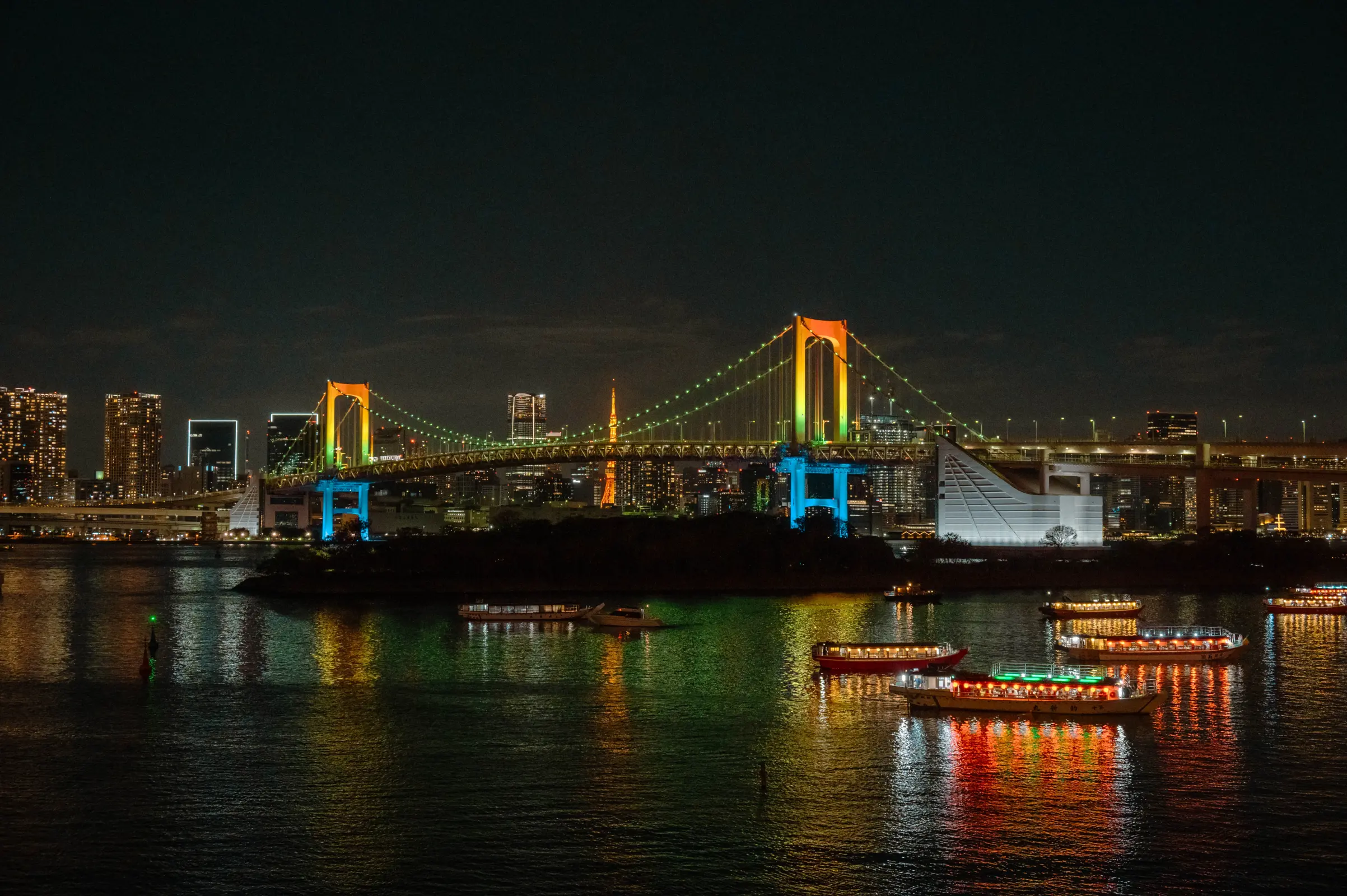
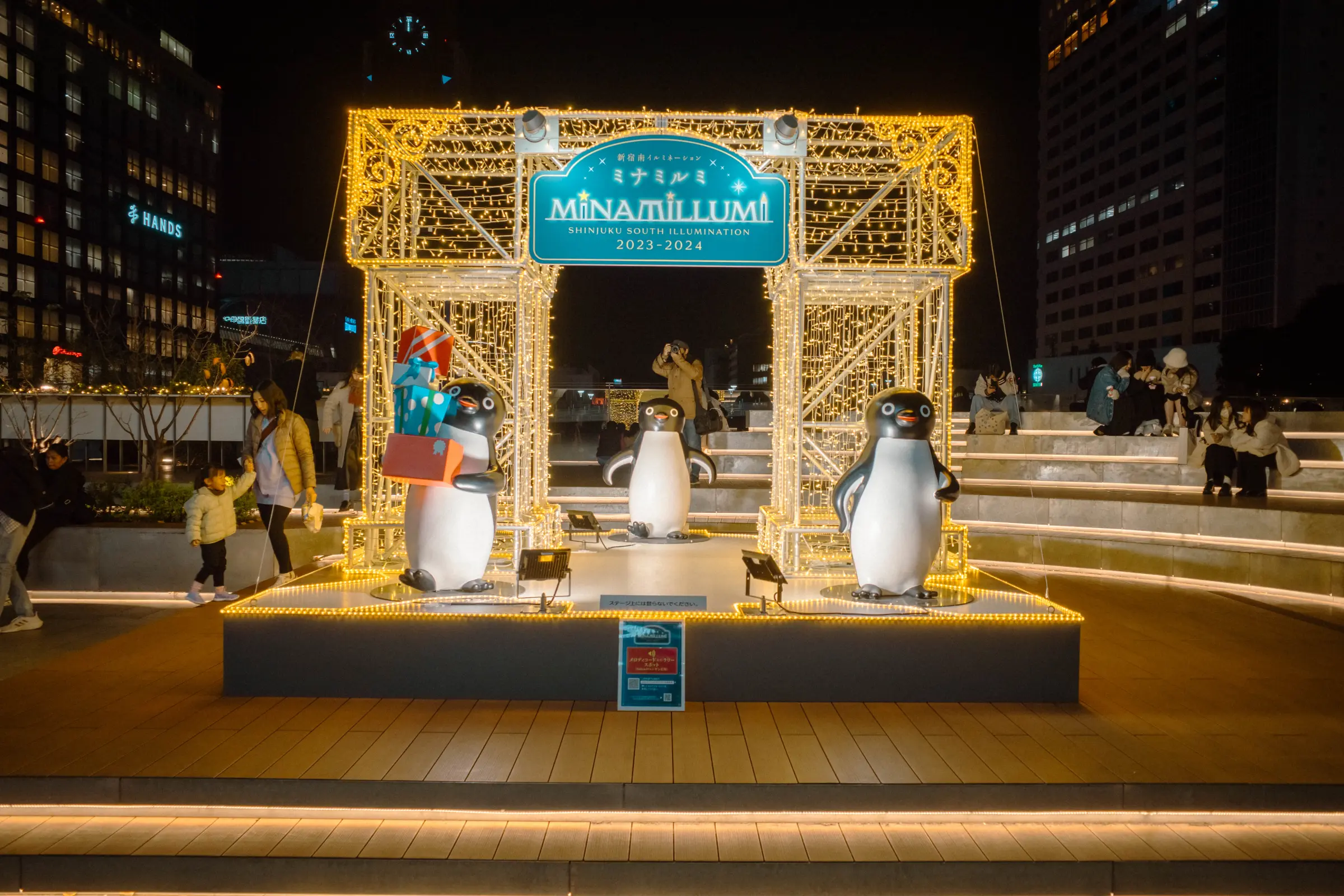
Leaving the Rinkai Line station, I immediately saw the distinctive spherical structure of the Fuji Television building. Walking toward Rainbow Bridge, I could see the elevated tracks of the Yurikamome line. Farther away stood Rainbow Bridge, leading to Shibaura, and Tokyo Tower among the brightly lit buildings of Minato Ward. People were gathering in the waterfront park for the fireworks. Japan's fireworks festivals are not limited to summer: Odaiba also holds them on clear winter evenings.
Christmas was still three weeks away, but the city was already full of its atmosphere. On the bridge toward Odaiba Park, a street performer dressed as Santa played "Jingle Bells" on a saxophone. My friend had long wanted to try a small roadside coffee stand in Kabukicho. Our meeting was a chance to visit it and shoot some film.
Kabukicho, Shinjuku
Kabukicho is northeast of Shinjuku Station. Outside JR Shinjuku, crowds gathered around street bands and performance artists. Police notices prohibiting outdoor performances hung from utility poles and railings. On Musashino Street near the exit, we saw officers questioning someone who seemed to be streaming a street performance. These performances affect pedestrians, but the four or five bands along the street had attracted many listeners. They appeared popular, though livestreaming might lead to police intervention over the privacy of passersby. People also seemed reluctant to appear in tourists' photographs and videos. For that reason, I missed recording some valuable moments.
On Kabukicho Ichibangai, I felt as if I had returned to a small county town. Cinemas, restaurants, and adult entertainment businesses filled the area. Comparing it to a roadside market would be an exaggeration, but the visual impact was strong. Extravagant signs with yellow lettering on red backgrounds were everywhere. Large portraits of male and female hosts covered buildings. As we passed the Kinokuniya bookshop, an advertising truck for a host club went by. Hosts entertain customers while they drink. These trucks are paid displays of a club's wealth and influence, with something of a gangster's style. The vehicle was as large as a container truck, but giant LED screens filled the cargo area and repeatedly showed promotional portraits of its leading hosts.
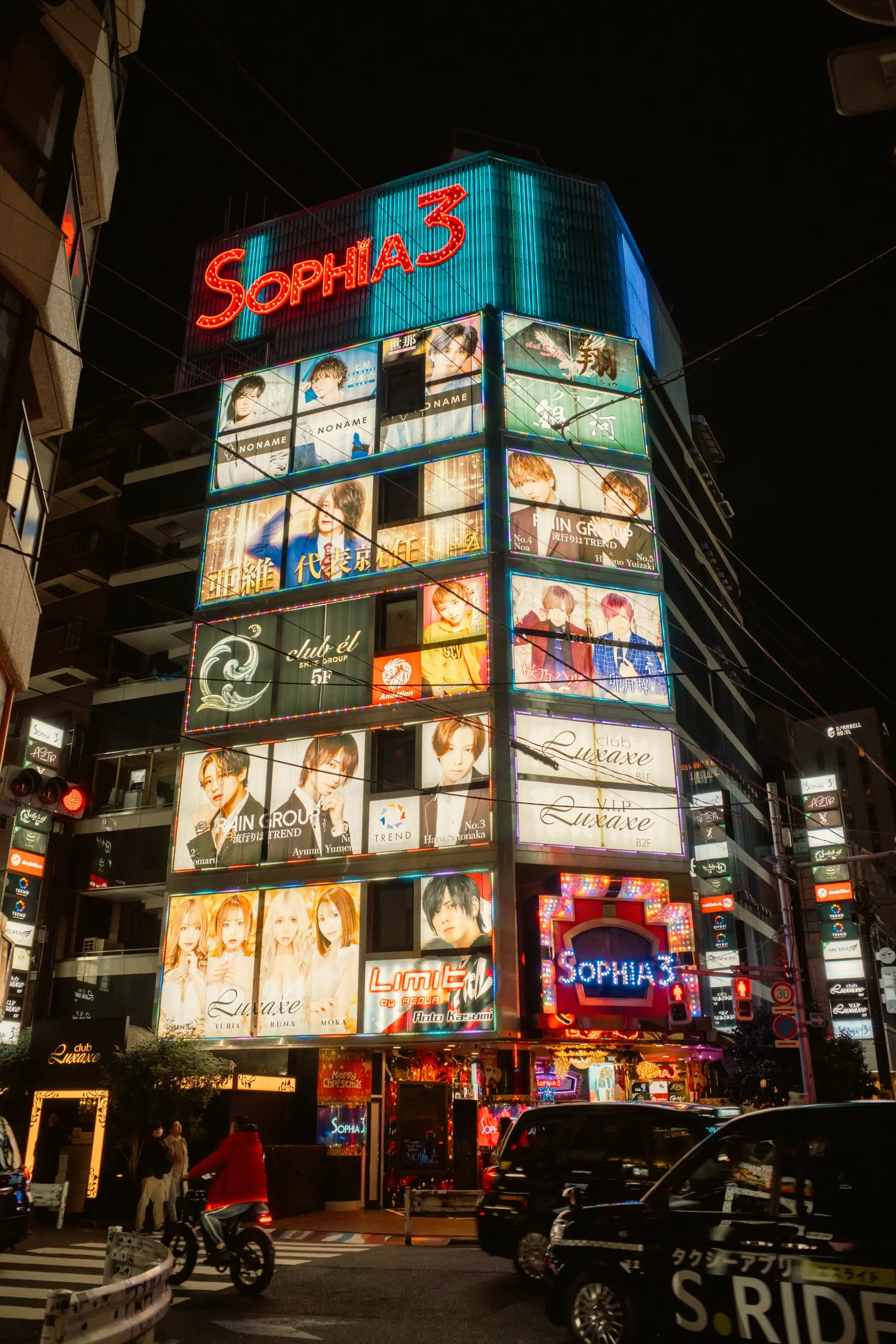
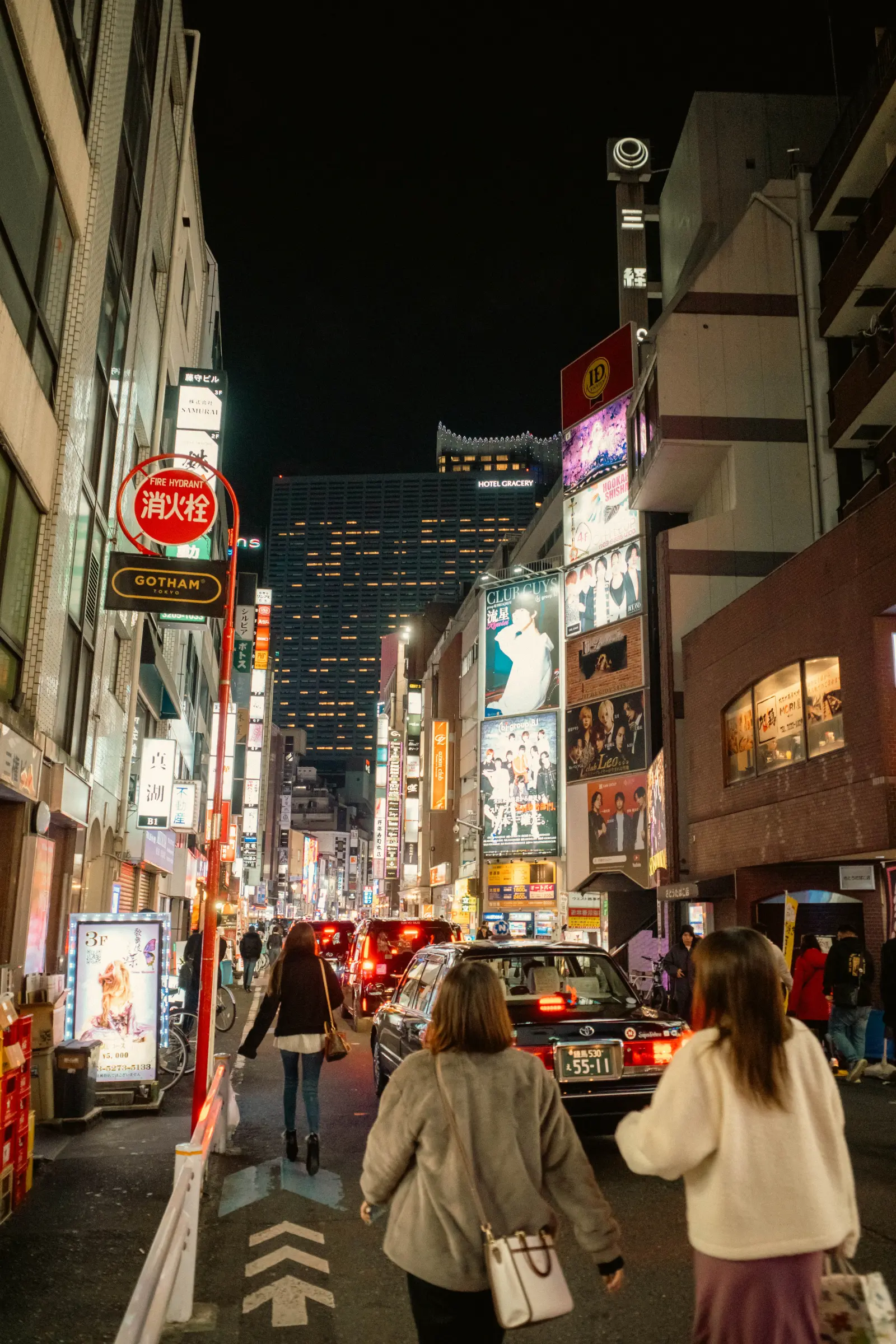
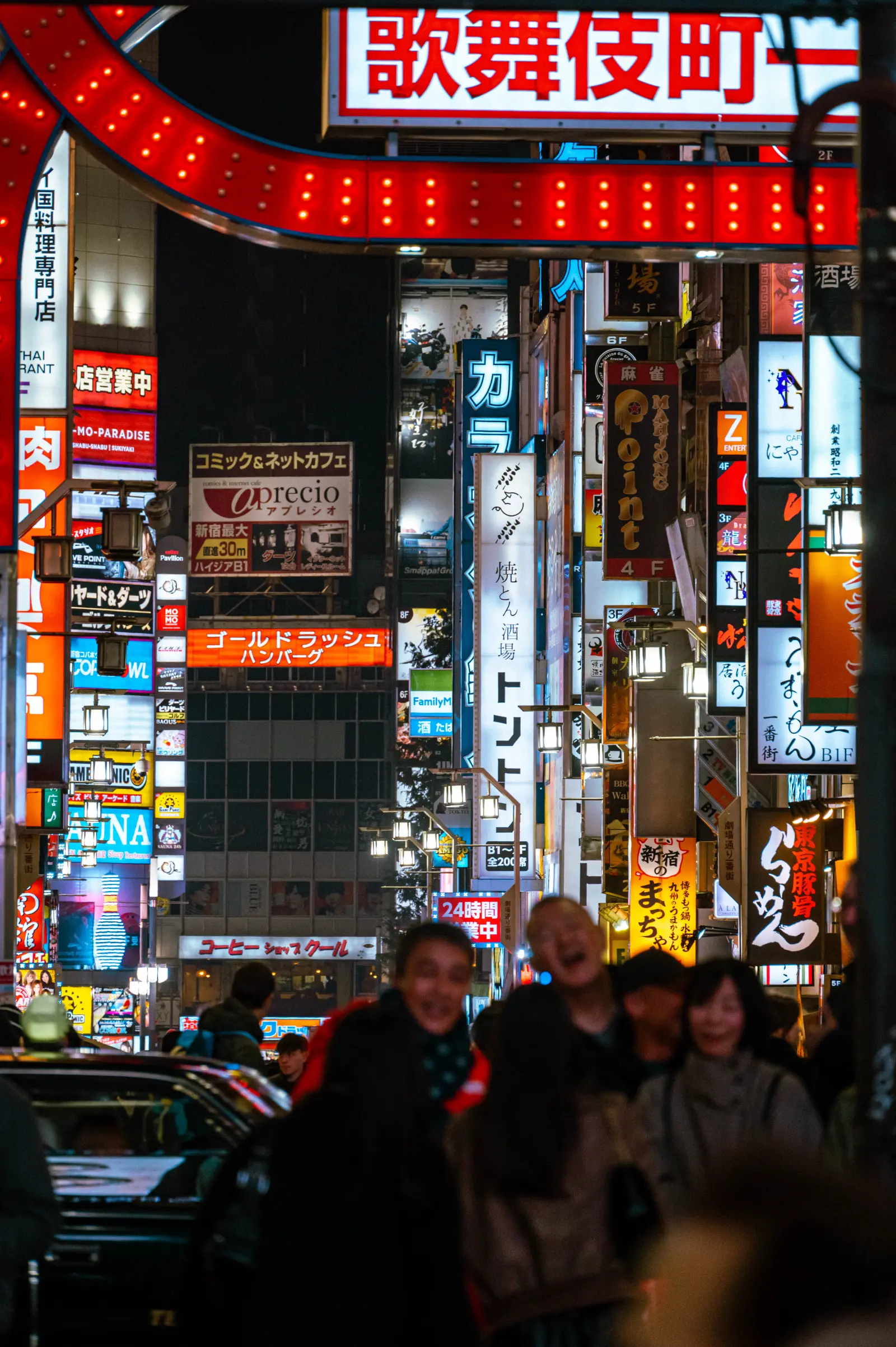
This is a place where young people let themselves go. Flashing signs stood on ground covered with cigarette ends and scraps of paper. People walked arm in arm between restaurants and bars. Police notices on utility poles told pedestrians to report touts immediately. This probably meant people sent by host clubs to attract customers from the street. Police stood on corners as well. The disorder was a little frightening.
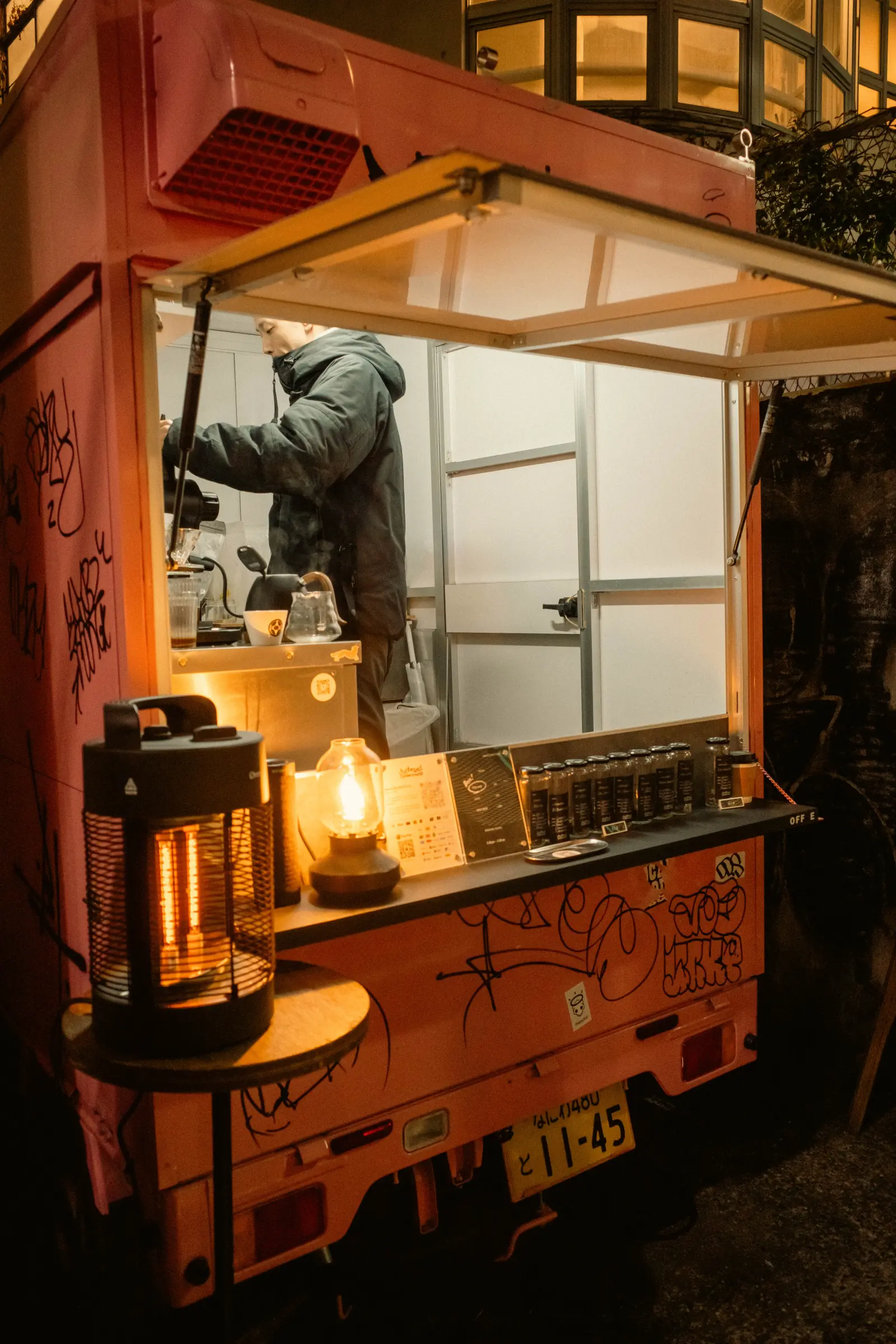
Golden Gai had a different atmosphere. Narrow alleys held many small bars. They served regular customers, with doors perhaps 1.8 meters high and only a few seats inside. Light from the little businesses fell onto the ground outside and made an attractive scene. At a street corner, we found the coffee stand my friend had described. It was really a small truck with a window opened at the back, where coffee was prepared in the cargo space. Two benches on the roadside served as the seating area.
It was getting late, almost ten o'clock, but Shinjuku was still crowded. After a short goodbye beyond the ticket gates, we went our separate ways.
Looking back
In about eight hours on my first evening in Tokyo, I experienced its everyday streets and varied nightlife: outdoor performances, the modern, almost futuristic Odaiba, Kabukicho with traces of the Showa era, and busy, crowded railway lines. These might be ordinary sights in a great city, but they were unforgettable to me. There were more experiences and impressions than I can record here. Some details may have been lost; others will have to wait for another time.
The internet can bring us images and sounds from across the world. But nothing replaces being there. The smells of a place, the warmth of its people, and its actual atmosphere cannot be experienced online.
Discussion
Comments are hosted by Disqus. Load them to connect to this service.